
The top-performing brands aren’t those producing the most content; they’re the ones squeezing every ounce of value from the content they already have.
With AI search, social platforms, and multiple discovery channels shaping visibility, one rule now stands out:
Create once. Share everywhere. Repeat smartly.
Studies show that repurposed content brings 65 per higher returns than creating new content again and again. Why?
Because people learn in different ways, and they don’t live on just one platform.
Why Content Repurposing Matters Right Now
- AI tools push content across multiple platforms
- Search now happens on social feeds, communities, and AI results not just Google
- Audiences favor short, visual, and quick-to-read content
This guide breaks down 9 practical content repurposing strategies to help you get more reach, more value, and more results from the content you already have without creating more work.
The Future Shift: Why Content Repurposing Strategies Are Now Required
Creating fresh content every day is hard. Doing it across many platforms is even harder. This is where content repurposing becomes a must, not a choice.
Instead of using one idea once, smart marketers now reuse strong content in many ways. Here’s why this approach works so well 👇
What Makes Content Repurposing Strategies So Effective?
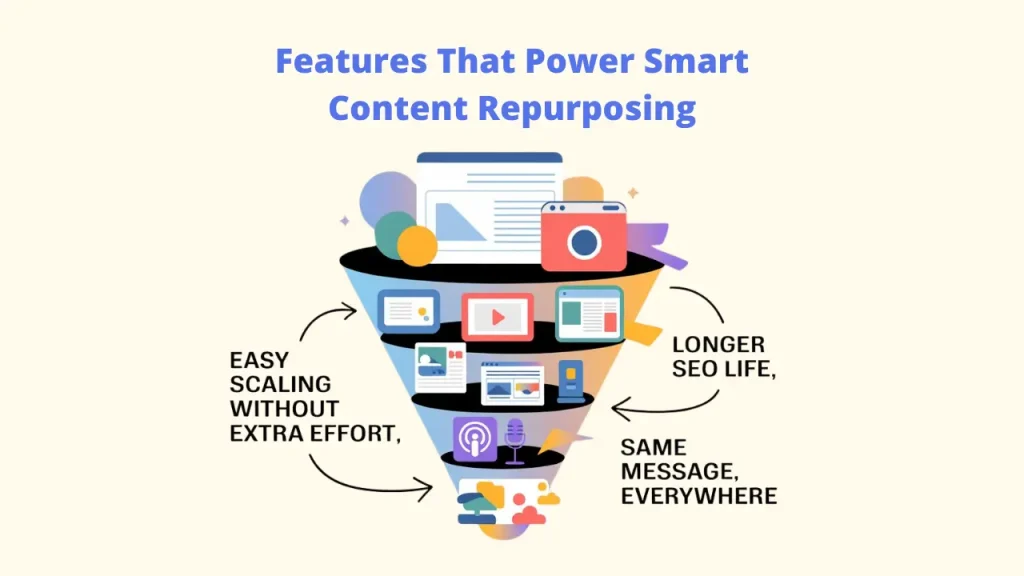
It can be daunting to produce content for numerous platforms. Because they enable you to do more with what you already have, content repurposing strategies are so effective. Instead of starting from zero every time, smart repurposing gives you three clear advantages:
1️⃣ Easy Scaling Without Extra Effort
One strong piece of content can be divided into 10-15 smaller pieces. That means more posts, more reach, and more impact without any additional effort.
2️⃣ Longer SEO Life
When you reuse content in different formats, you build connected topics. This helps search engines trust your site more and brings traffic from many keyword variations.
3️⃣ Same Message, Everywhere
People consume content in many ways: blogs, videos, emails, and social posts. Content Repurposing Strategies make sure your main message shows up everywhere while staying clear and consistent.
What This Means for the Future
Content repurposing isn’t a quick trick. It’s a smart way to make sure your best ideas don’t get used once and forgotten.
In the future, winning brands won’t create more content; they’ll reuse the right content more often.
Key Benefits of Content Repurposing
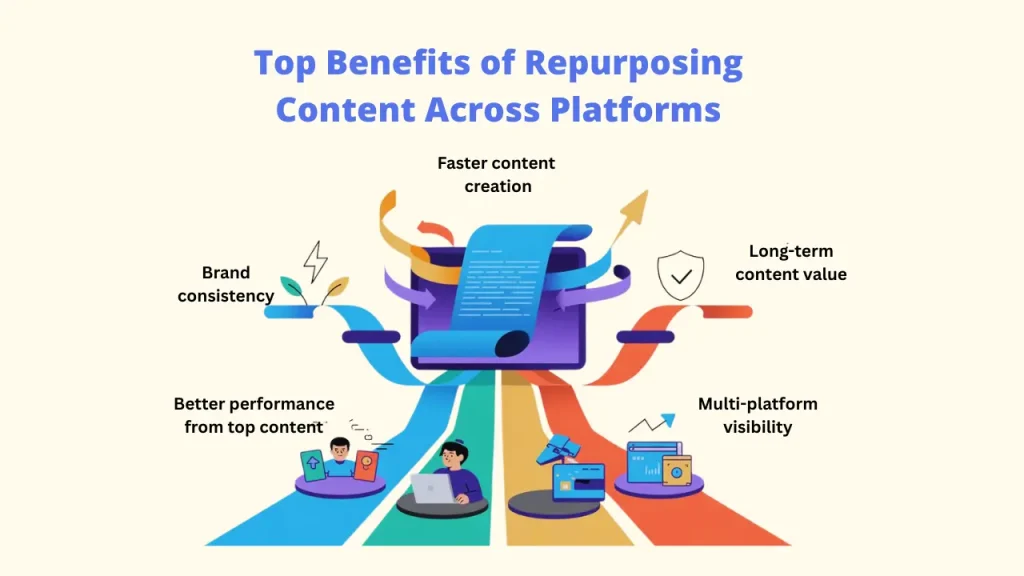
Content repurposing helps you:
✅ Grow content output without stress
✅ Keep old content useful and relevant
✅ Stay consistent across all platforms
✅ Increase visibility everywhere your audience is
✅ Get more results from your best content
9 Content Repurposing Strategies Every Marketer
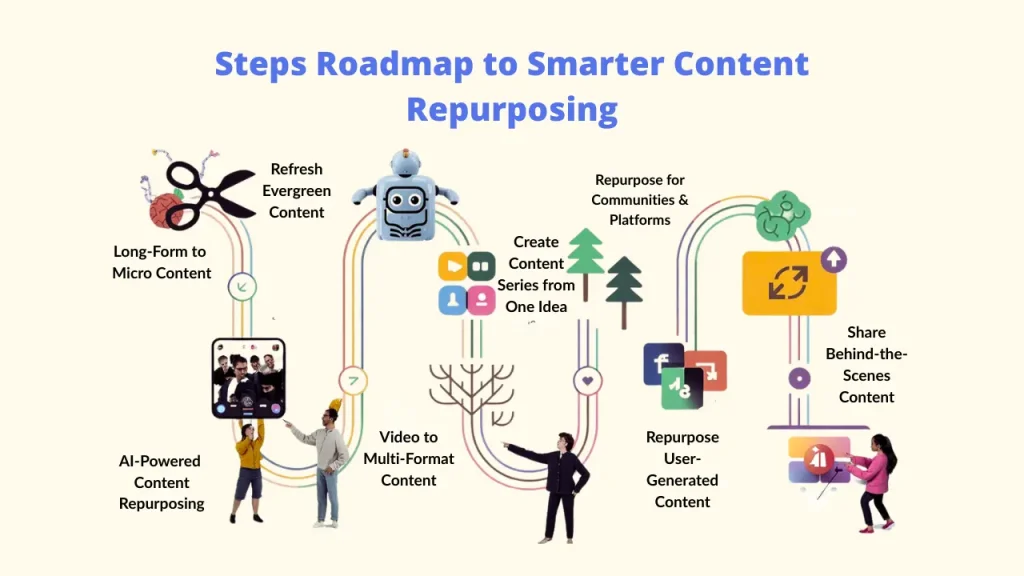
1. Turn Long-Form Content into Micro Content
Your long-form blogs and reports are goldmines of bite-sized insights. Extract key stats, quotes, and tips to create platform-specific micro content like Instagram infographics, LinkedIn carousels, Twitter threads, or TikTok-style reels.
This boosts reach by aligning with modern attention spans where a 15-second video can outperform a 2,000-word post.
💡 Quick Tip: While creating content, keep a list of strong quotes, facts, and highlights. These make repurposing faster and easier later.
2. Use AI to Repurpose Content Faster
AI makes Content Repurposing Strategies faster and smoother. Today’s tools can rewrite, shorten, and reshape content for different platforms while keeping your brand voice.
You can easily turn blog sections into LinkedIn posts, video transcripts into email newsletters, or podcast clips into social captions.
💡 Pro Tip: Set clear rules for tone, style, and wording in your AI tools to keep all content consistent and on brand.
3. Convert Videos into Multiple Formats
A single video can create multiple assets, blog posts, short clips, Reels, audio snippets, and quote graphics.
Use video transcripts to build SEO-friendly articles, cut short highlights for social media, and reuse audio for podcasts or audiograms.
You can also use tools like ARTICALIZE to convert videos into blog posts by starting with transcripts and then adding clear structure and search-friendly details for the blog post.
💡 Pro Tip: Adjust captions, video size, and hooks for each platform to get better reach and engagement.
4. Refresh and Re-Publish Evergreen Content
Your older content still has value. Many posts continue to attract search traffic, but over time, the information can feel outdated.
Refreshing this content rather than producing new content is one of the best content repurposing strategies. Keeping dates, facts, and examples up to date makes your content appear more recent and pertinent to search engines.
This method raises search engine rankings without producing brand-new content. Freshness is rewarded by search engines, and revised publication dates can make previously popular articles more visible.
💡 Pro Tip: Keep your existing links. Updating content while preserving backlinks helps maintain SEO strength and signals relevance to search engines.
5. Repurpose User-Generated Content (UGC)
Make good use of the content that your audience already produces for you. Turn social mentions into short case stories, change customer reviews into visual testimonials, and group common questions into helpful FAQ sections.
This is one of the most powerful content repurposing strategies because real user voices build trust faster than brand messaging. Plus, it reduces the pressure to constantly create new content.
Since genuine user voices foster trust more quickly than brand-generated content, this is one of the best content repurposing strategies.
⚠️ Important Note: Always get permission before reusing user content and give proper credit to the original creator.
6. Create Content Series from One Idea
Some topics are too large to fit into a single post. One of the most effective content repurposing strategies is to divide a single strong idea into a clear, step-by-step series that keeps readers interested.
You can turn deep content into multi-part blog posts, short email lessons, or scheduled social updates. Each should be useful on its own, while also making readers want to see what’s next.
This approach boosts engagement because:
- Readers return for the next part.
- Email open rates rise with ongoing stories.
- Social media followers grow accustomed to consistent, anticipated posts.
7. Share Behind-the-Scenes Content
The work behind your final content is just as valuable as the finished result. Showing your process helps people connect with your brand on a human level.
Share how ideas are created, explain decisions you made, and talk about what worked and what didn’t. This type of content performs especially well on social platforms where people value real, honest stories.
Behind-the-scenes communication fosters trust. Using actual examples, it presents your team as knowledgeable, personable, and competent.
💡 Pro Tip: Focus on sharing useful lessons and insights. Avoid shallow “day-in-the-life” posts that don’t offer real value.
8. Repurpose Content for Communities & Platforms
People spend time on different platforms every day. One of the smartest content repurposing strategies is shaping your content to fit where your audience already is.
Turn blog posts into detailed LinkedIn articles that spark professional discussions. Share helpful ideas in Reddit communities where value builds trust. Use your existing content to answer Quora questions in a clear and confident way.
Use tools like Articalize to reshape content for each platform while keeping your main message clear and searchable.
💡 Community Tip: Be helpful, not sales-focused. Communities respond better to real advice and expertise than promotion.
9. Turn Blogs into Interactive Content
Blog posts don’t need to stay static. You can turn them into interactive content that keeps readers engaged longer and helps grow your leads.
Transform guides into easy calculators or quick self-check tools. Turn checklists into downloadable resources that users can access by sharing their email.
Interactive content works better because people like to take part. They spend more time exploring, finish tasks, and are more likely to share their results.
🎯 Lead Tip: Interactive content encourages sign-ups naturally by offering useful results, helping increase conversions while still providing real value.
Building Your Content Repurposing Workflow
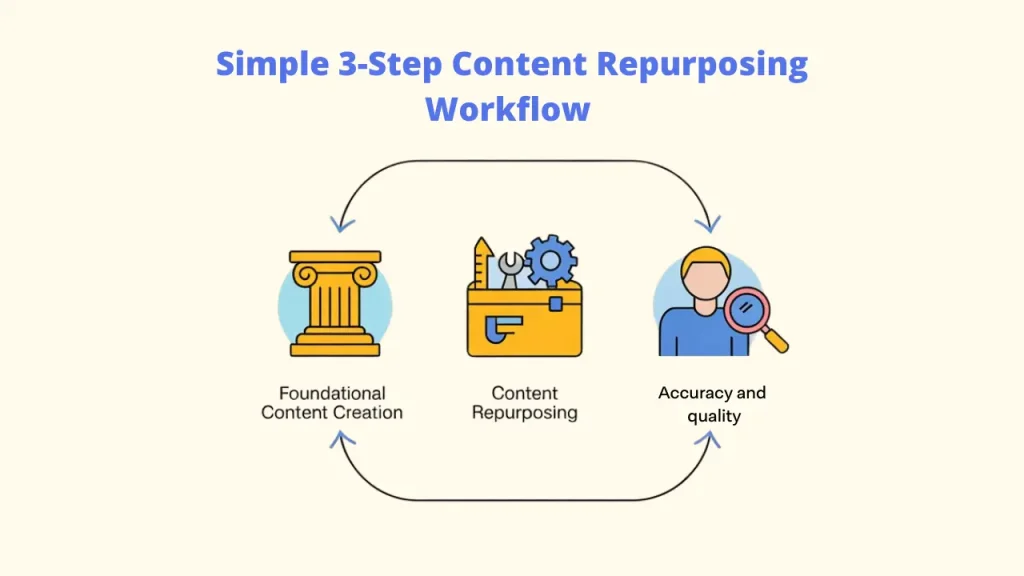
To make content repurposing strategies work well, you need a clear and simple system. A good workflow saves time, maintains quality, and makes it easier to reuse content again and again.
1. Start with a Strong Core (Pillar Content First)
Begin with detailed, high-quality content such as long videos, complete guides, or in-depth blog posts. This type of content gives you many options for reuse later.
Avoid starting with short posts. A strong main piece makes repurposing smoother and helps position your brand as an authority.
💡 Expert Advice: Divide your main content into distinct sections so that each can be used independently.
2. Must-Have Tools for Easy Content Repurposing
The right tools can make content repurposing strategies faster and much easier to manage.
- Use AI tools like ChatGPT or Claude to rewrite, shorten, and reshape content
- Use tools like Descript to turn videos into written text
- Use Canva to create clean and eye-catching visuals
- Plan, schedule, and publish content with Articalize by integrating everything with your content management system.
AI testing tools help you try different content versions quickly, while branding tools keep your tone and visuals consistent across platforms.
💡 Pro Tip: Pick content repurposing tools that work well together to reduce manual work and save time.
3. Why Human Review Still Matters
AI can handle tasks like transcribing, summarizing, and formatting. But human review is still essential.
Editors now act as content guides. They choose what to repurpose, improve AI drafts, add unique ideas, and make sure each piece supports business goals.
🎯 Quality Tip: Set clear quality rules for AI content before publishing. This protects your brand while still saving time.
Conclusion: Content Repurposing as Growth Strategy
Content repurposing represents fundamental strategic thinking about resource allocation and audience reach. It acknowledges that your best ideas deserve more than single-platform, single-format exposure.
This approach isn’t about cutting corners or lowering quality. It’s all about being where your target audience is already. Repurposing allows you to contact people in their preferred format, as different people absorb material in different ways.
Instead of creating new content all the time, focus on reusing what already works. Let tools like articalize handle the technical work while you focus on strategy, clarity, and value.
Think of every piece of content as a long-term asset. What you create today should continue bringing results for months or even years, not just a few days after publishing.
In the long run, Content Repurposing Strategies are not a trick or trend. They are the foundation of scalable, sustainable content marketing that respects both your audience’s needs and your team’s time.
FAQs about Content Repurposing Strategies
Que: How do I know which content is worth repurposing?
A: Start with content that already performs well. Look at posts, videos, or pages that get strong traffic, good engagement, or steady leads. Evergreen content, detailed guides, and answers to common customer questions are perfect choices.
Que: Won’t content repurposing hurt my SEO with duplicate content penalties?
A: No, when done correctly. Avoid copying the same text everywhere. Change the format, structure, and angle for each platform. Turning a blog into a video, carousel, or email rarely causes SEO issues.
Que: How do I maintain consistency across repurposed content?
A: Create simple brand rules for tone, words, visuals, and messaging. Use templates to save time and review content before publishing. AI tools like Articalize can also help keep everything aligned with your brand style.
Que: How often should I update and republish existing content?
A: Check your best evergreen content every few months. Update it when trends change, new data appears, or rankings drop. It is possible to revitalize old content with minor updates.